
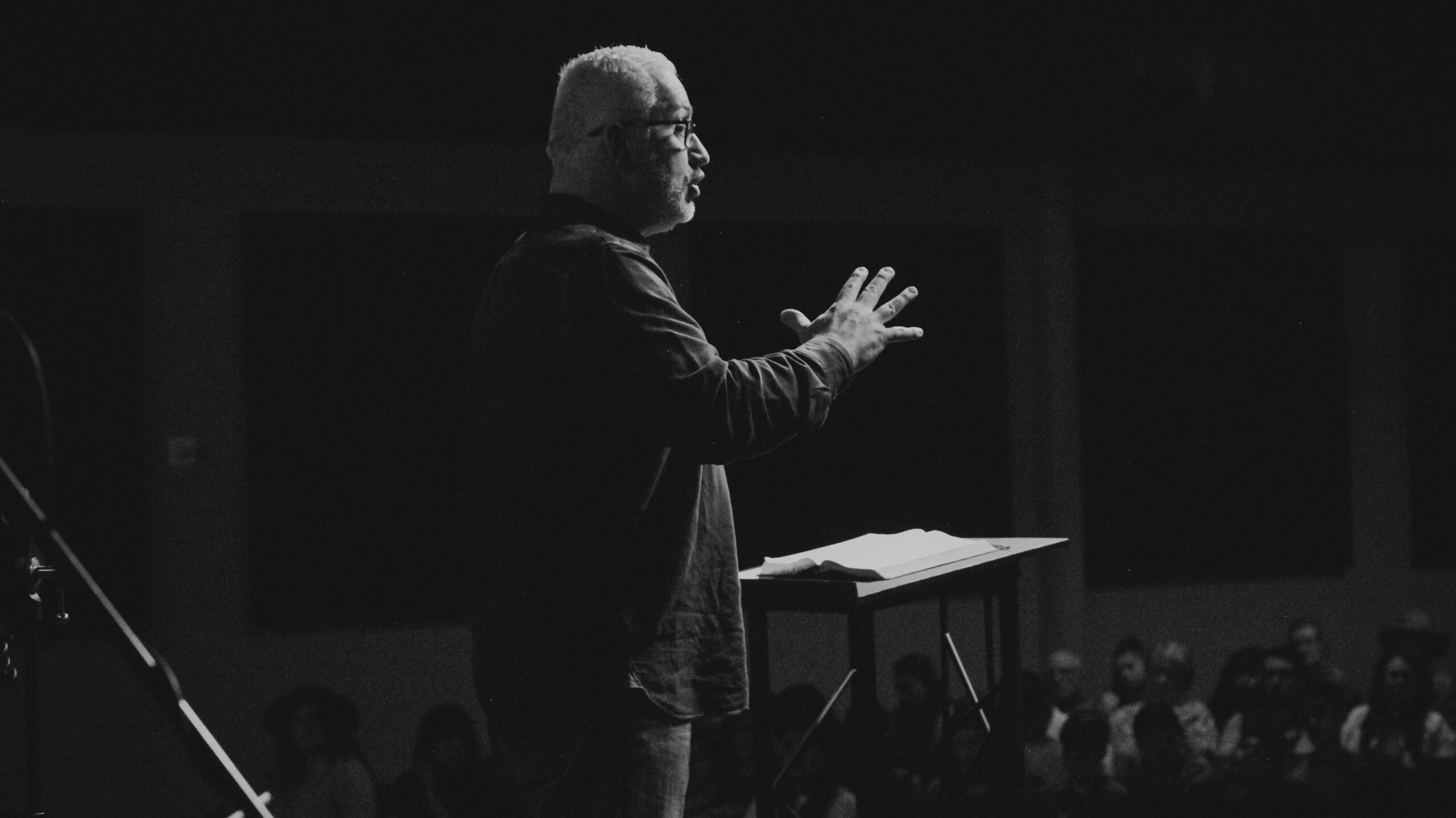
A few weeks ago I did a session at the BJU Seminary CoRE Conference on a really simple but important question: Are my notes (and my use of them) helping or hindering me from serving people the very words of God?
Not long after that, I had the chance to continue the conversation on BJU Seminary’s podcast, Theologically Speaking.
Delivery as an Act of Service
Most evangelical preachers (including me) would instinctively agree with the statement that “content is king.” And of course, what we say in preaching is critically important. But one potential unintended consequence of that conviction is that we can begin to dismiss delivery, as if caring about how we say what we say is somehow unspiritual or unimportant.
But the more I’ve taught preaching (and the more I’ve listened to sermons over the years), the more convinced I’ve become that delivery is not mere decoration; it is an act of service. For me this conviction is anchored in 1 Peter 4:10–11. Speaking is a gift meant to serve others. And those who speak are called to speak “as the oracles of God.” So if my goal is truly to serve the flock with the Word, I cannot ignore the question of whether people are actually hearing what I say in light of how I say it.
And that’s where the discussion of notes comes in. The notes you bring into the pulpit, and how you use them, directly impacts your effectiveness in serving the people of God with the Word of God. Once that connection is made, it becomes harder to treat the use of notes as a mere preference or personality quirk. It becomes a pastoral question.
Five Non-Negotiables of Delivery
It doesn’t matter if you preach with a full manuscript, a detailed outline, a skeleton outline, or no notes at all, there are certain essentials of good delivery that allow you to serve your audience well.
- Eye contact. You cannot look at your notes and your people at the same time. Eye contact communicates sincerity, helps maintain attention, and lets you read the room.
- Physical freedom and embodied communication. One author says, “Your body follows your focus.” When your focus is locked on the page, your body will often communicate that.
- Vocal variety and energy. God’s Word deserves more than a flat recitation. We aim (as best we can) to communicate something of the weight, tone, and urgency of the text.
- Authenticity and credibility. Over-reliance on reading can (sometimes) communicate that the message has not been internalized. That can create a credibility problem even when the content is orthodox and carefully prepared.
- Responsiveness and flexibility. Preaching is not mail delivery. We are not merely dropping off content. We are shepherding people, and shepherding requires attentiveness and, at times, adaptability.
These five non-negotiable of good delivery help us evaluate whether our approach is actually serving the people God has placed in front of us.
Precision or Freedom at a Cost
I’ve found it helpful to describe the tradeoffs this way: Manuscript preaching offers precision but with a cost, and notes-free preaching offers freedom with a cost.
- Manuscript preaching can sharpen language and preserve careful thought. But it can also reduce eye contact, flexibility, and naturalness if we are not careful.
- Notes-free preaching can strengthen connection and responsiveness to our audience. But it can also increase cognitive load, invite rabbit trails, and create anxiety about forgetting something important.
The goal of my session was not to argue for or against a particular method. I simply want those of us who preach to think carefully and deeply about our methods and evaluate whether or not they are best serving the flock with the Word.
- Ask whether your current approach is more about your comfort than their good.
- Seek feedback from trusted people who will tell you the truth.
The Example of Jonathan Edwards
One of my favorite parts of preparing for this session was doing research on the preaching of Jonathan Edwards. Edwards is often viewed as the poster child for monotone manuscript preaching. But the manuscript evidence suggests that Edwards’ delivery developed over time. John Carrick makes a compelling case that Edwards’ sermon notes demonstrate that he moved away from the use of full manuscripts to the use of notes that allowed him to preach more extemporaneously.
Why does that matter? Edwards’ example reminds us that that growth is possible, and that our current method does not have to be our permanent method.
I hope the session and podcast will encourage you to keep growing, not only in what you say, but also in how you say it, so that God’s people are served, and God is glorified.